Practical Learning Versus Lectures
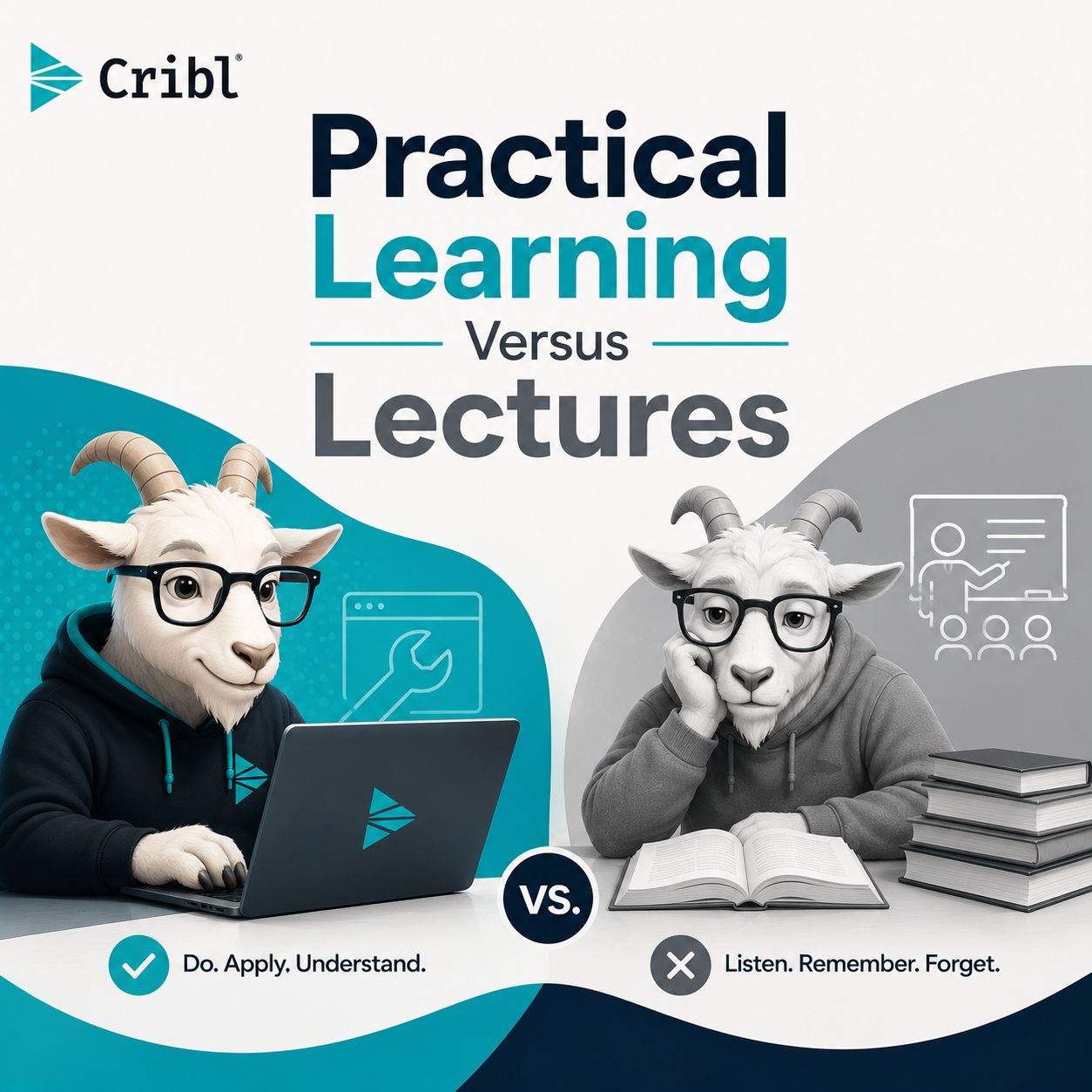
Why Hands-On Learning Matters More Than Ever in the Age of AI
I've always believed the best way to learn is by doing.
You can read every page of the documentation, watch hours of training videos, and understand the underlying theory, but none of it compares to sitting down with the product and trying it yourself. That moment when you click the wrong button, troubleshoot an error, and finally get something working is where real learning begins.
That belief has shaped the way I've designed technical training throughout my career. Whether I'm building certification programs, creating guided labs, or developing product education, my goal is always the same: get learners interacting with the technology as quickly as possible.
The Driving Test Problem
Imagine learning to drive by only reading the driver's handbook.
You study every traffic law. You memorize every road sign. You understand exactly how a transmission works and can explain the physics behind anti-lock brakes.
Then someone hands you the keys and tells you to merge onto the interstate.
Would you feel ready?
Of course not.
Driving isn't just knowledge. It's muscle memory. It's confidence. It's making dozens of tiny decisions every second that only come from experience.
Technical skills work exactly the same way.
Knowing Isn't the Same as Doing
I've seen learners score exceptionally well on written exams and still struggle when asked to perform the same tasks in a live environment.
The opposite is also true.
I've watched people who weren't experts on the theory become highly effective because they'd spent hours experimenting, troubleshooting, and solving real problems.
Reading teaches recognition.
Practice develops intuition.
Those are very different skills.
AI Changes the Equation
We're entering a fascinating moment in education.
Creating written content has never been easier.
Creating videos has never been easier.
Need a lesson? AI can draft one in minutes.
Need an avatar to narrate it? AI can generate that too.
As the cost of producing traditional learning content approaches zero, simply creating more documentation or more videos becomes less of a competitive advantage.
The scarce resource is no longer content.
It's experience.
The Future of Learning Is Interactive
This is why I believe the biggest opportunity in technical education isn't producing more content.
It's creating better experiences.
Guided labs.
Interactive simulations.
Sandbox environments.
AI-powered coaching.
Real-world scenarios where learners can safely make mistakes and receive immediate feedback.
These experiences transform passive consumers of information into confident practitioners.
That's the kind of learning people remember.
Designing for Confidence
When I build curriculum, I don't ask, "What information should the learner know?"
I ask, "What should they be able to do?"
That single question changes everything.
Instead of organizing content around concepts, you organize it around outcomes.
Instead of lectures, you create experiences.
Instead of memorization, you encourage exploration.
Final Thoughts
AI will continue changing how educational content is created.
That's exciting.
But the value of learning has never been the content itself. It's what the learner can accomplish afterward.
Knowledge tells you what to do.
Practice teaches you how to do it.
And confidence comes from doing it enough times that you no longer have to think about it.